

Glazing estimating software
Bid more glazing work. Price each frame and window.
Storefront and curtain wall by area and perimeter from the frame elevations. Windows counted by size from the window schedule.
Parts on your items work out the glass area and perimeter sealant, and Kredna prices it all with your own costs.
Illustration on a made-up plan.
What a glazing takeoff carries.
Frames are drawn as areas on the elevations. Windows are counted by size. Interior partitions and railings are drawn as runs.
| What you take off | How | Carried in |
|---|---|---|
| Storefront Framing and glass from the frame's area. Perimeter sealant from its edge. | Area | SF |
| Curtain wall Framing, glass and spandrel as shown on the frame elevations. | Area | SF |
| Windows by size Width and height on the item. The glass area and the sealant follow from formulas. | Count | EA |
| Perimeter sealant at frames and windows A part of each frame and window item, from its perimeter. | Linear | LF |
| Entrance doors, pairs and singles With the hardware the schedule lists. | Count | EA |
| Interior glazed partitions The length drawn times the height you set. | Linear | SF |
| Sidelights, borrowed lights and lites in doors Door lites from the door schedule. | Count | EA |
| Mirrors | Count | EA |
| Glass railings | Linear | LF |
Take off frames from the elevations.
Draw each storefront and curtain wall frame on the building elevations or the frame elevations. Its area carries the framing and glass, and a part on the item carries the sealant from its perimeter.
Check the head, jamb and sill details for the sills, flashings and sun shades that belong to each system.
Count windows from the schedule.
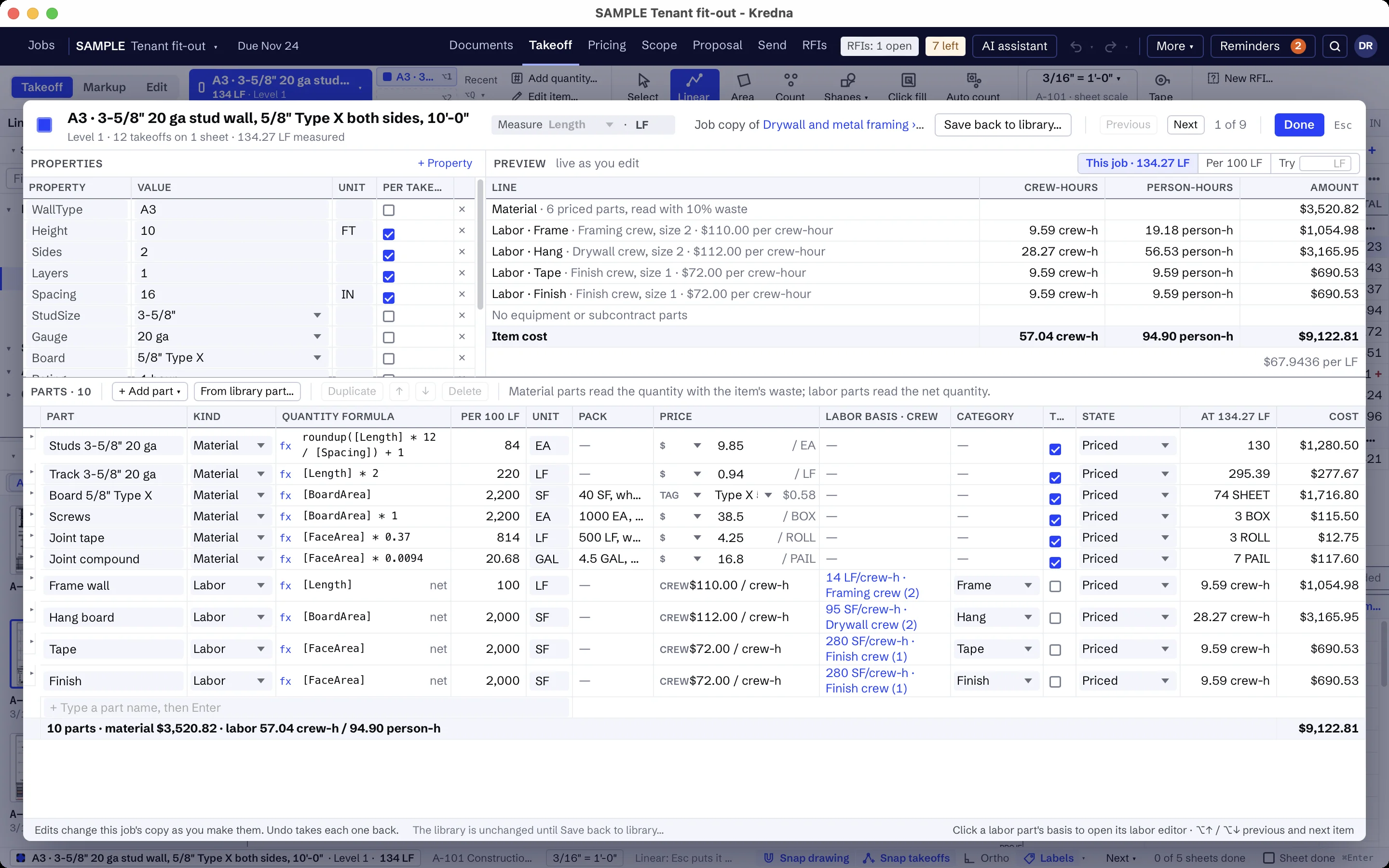
Make one window item for each size on the window schedule, with its width and height. Count the windows on the elevations, and the parts work out the units, the glass area and the perimeter sealant.
Keep glass types and entrances apart.
Insulating, tempered, laminated, fire-rated and spandrel glass price differently. Make an item in your library for each type the glazing legend calls for.
Count entrance pairs and singles with the hardware the door schedule lists. Put alternate work in a folder marked as an alternate, so it is priced against the base bid and never enters it.
Build your glazing items once.
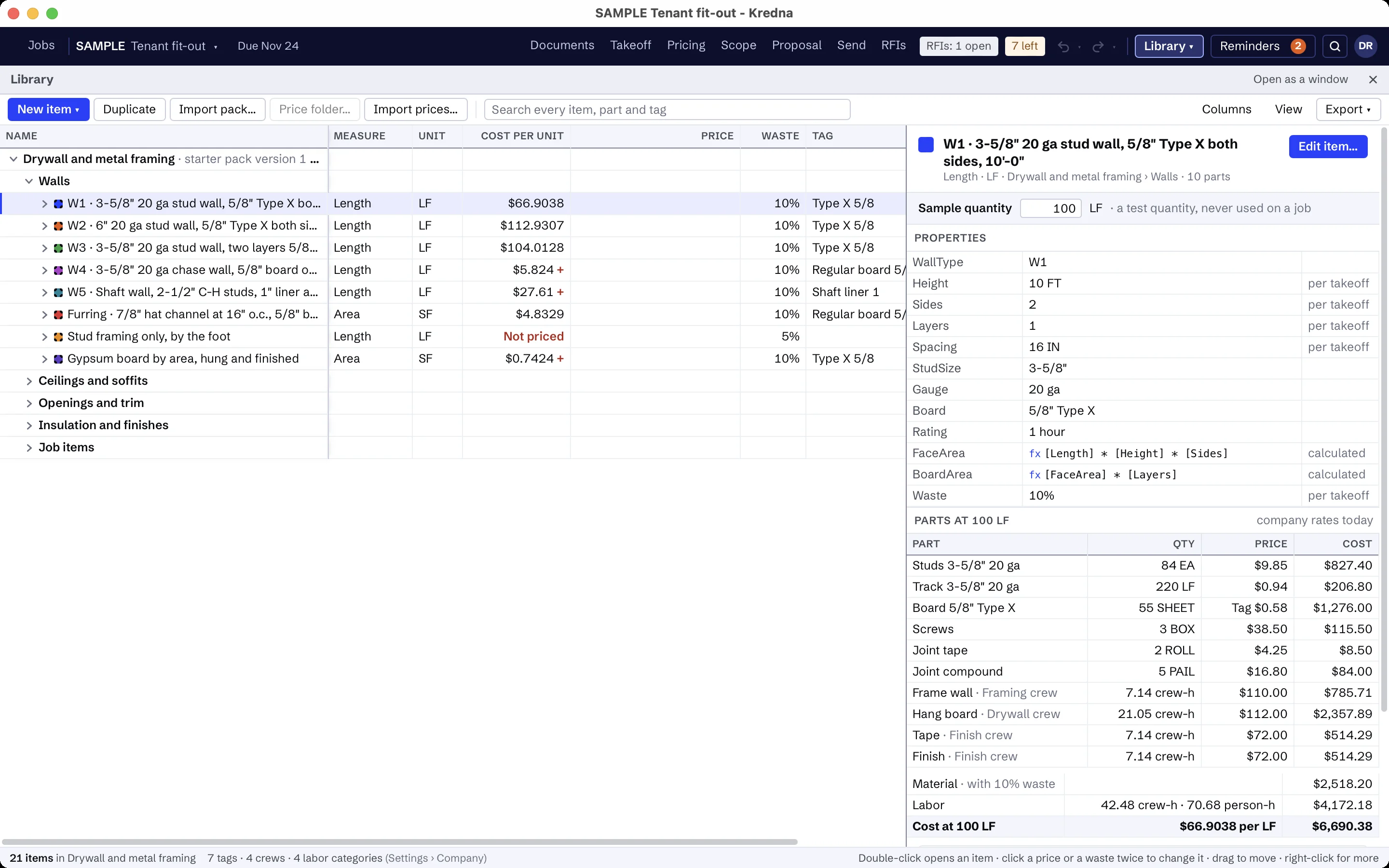
There is no glazing starter pack. Build your items in a Glass and glazing folder in your library, for example in four parts: storefront and curtain wall, windows, entrances, and interior glass and mirrors. Items like these:
- Storefront and curtain wall, each with framing and glass by area and perimeter sealant
- Window, counted by size, with window units, glass area and perimeter sealant
- Entrance doors, pair and single
- Interior glazed partition, sidelight or borrowed light, glass in a door, mirror and glass railing
- Your own clauses for the glazing and entrances, openings framed before you measure, and doors and frames, supports and final cleaning by others
The prices are yours to set. A part without a price shows as Missing, never as zero, and every total that includes it is marked incomplete until you price it.
Settle what is by others before the bid goes out.
Set up the scope assistant for glazing once: what to look for, which disciplines and spec sections to read, and what is usually by others. It reads the elevations, the window schedule, the glazing legend, the door schedule and the details for glazing scope, highlights each reference so you can jump to it, and flags lines like these as usually another trade's. Its findings stay drafts until you accept them.
- Hollow metal and wood doors and frames
- Structural supports and embeds for the systems
- Power for automatic entrances
- Final cleaning
- Skylights, unless listed
AI findings need estimator review. Check quantities, costs and scope against the project documents before submitting a bid.
Moving from another takeoff tool?
Pick an item, measure on the sheet and watch the quantity total in the job tree. Build your items once in the library, and the takeoff, pricing and proposal all read the same job.
Glass and glazing questions
Can Kredna take off curtain wall by the square foot?
How are windows counted from the window schedule?
Which drawings does a glazing takeoff use?
Who carries the sealant at the frames?
What does the scope assistant look for on a glazing job?
Bring a glazing set you know.
See frames, windows and the proposal come together on a job your company has bid.