

Plumbing estimating software
Bid more plumbing jobs. Count fixtures, run the pipe.
Fixtures counted on the plans and checked against the fixture schedule. Water, waste, vent and gas pipe by system, size and length.
Kredna prices the takeoff with your own items and costs and keeps each quantity on its sheet.
Illustration on a made-up plan.
What a plumbing takeoff carries.
Fixtures and specialties are counted. Pipe is drawn as runs by system and size, and the hangers come from the length through a part on the pipe item.
| What you take off | How | Carried in |
|---|---|---|
| Fixtures by type Water closets, urinals, lavatories, sinks, showers and drinking fountains. | Count | EA |
| Domestic water pipe Hot and cold, with the pipe size on the item. | Linear | LF |
| Sanitary waste pipe | Linear | LF |
| Vent pipe | Linear | LF |
| Gas pipe | Linear | LF |
| Hangers on water and waste pipe A part on the pipe item, from each run's length at the spacing you set. | Linear | EA |
| Floor drains and cleanouts | Count | EA |
| Water heaters | Count | EA |
| Storm piping and roof drains | Linear | LF |
| Vertical pipe from the risers Type the lengths from the riser and isometric diagrams as a quantity on the item. | Typed | LF |
Count fixtures against the schedule.
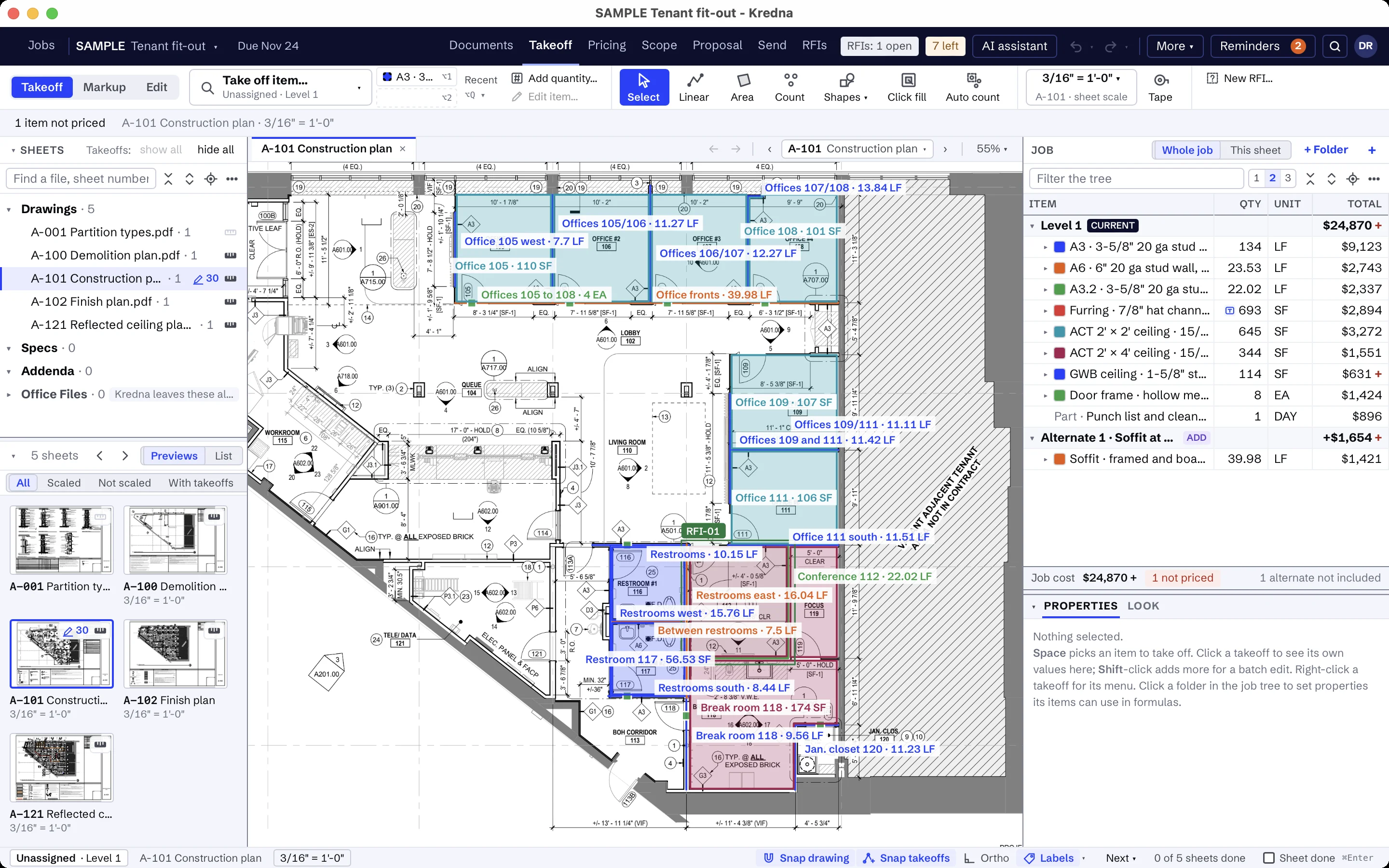
Count each fixture by type on the plumbing plans and the architectural plans. Then check the totals in the job tree against the fixture schedule, so the plan and the schedule agree before you price.
Run the pipe by system and size.
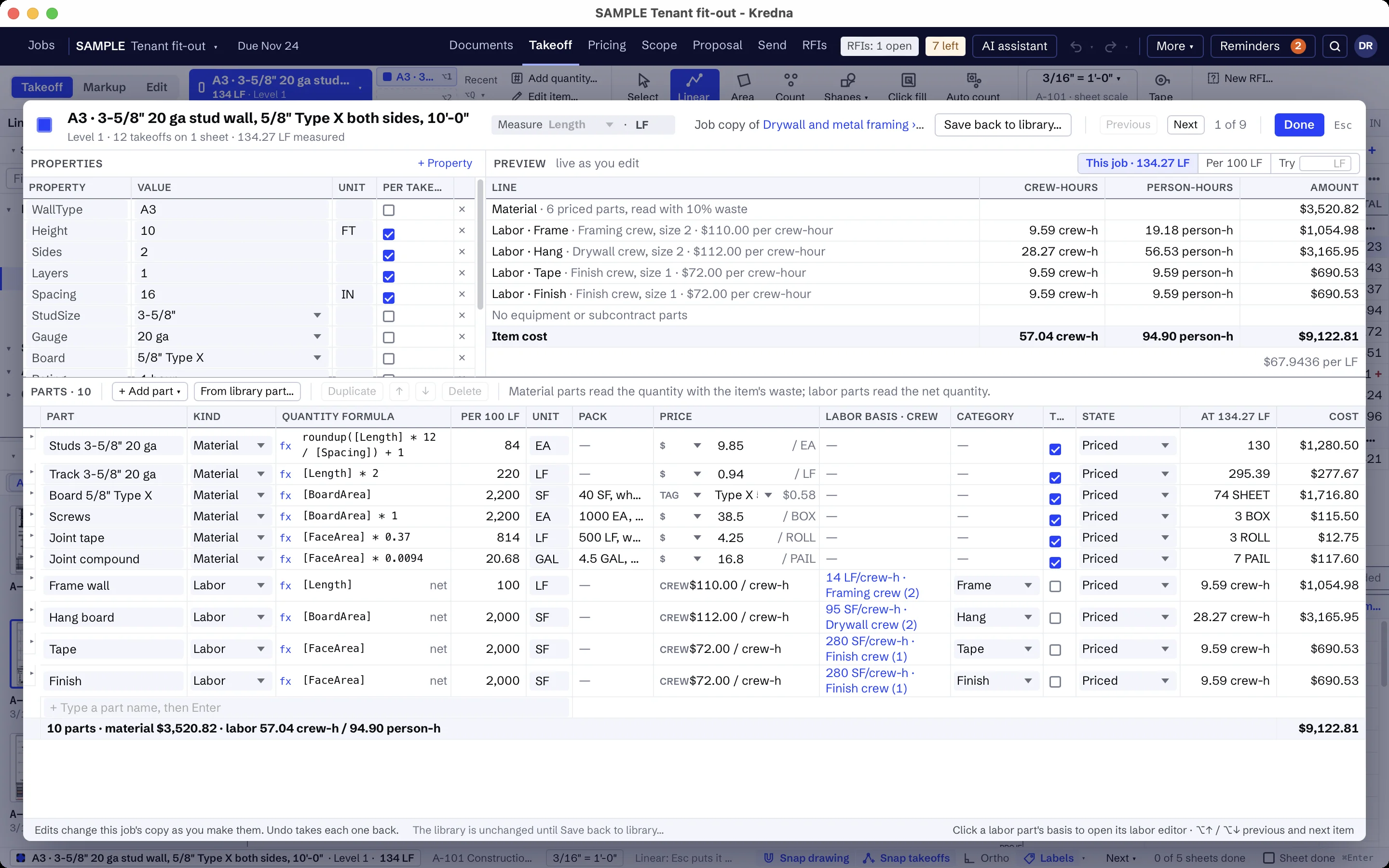
Draw domestic water, waste, vent and gas as runs, each item at its size. Give water and waste pipe a hanger part at the spacing you set.
Take the vertical lengths from the riser and isometric diagrams and type them in as a quantity on the same item.
Keep above and below the slab apart.
Make a folder for below the slab and one for each level or area. The underground pipe prices in its own folder, with its trenching where it is given to you, and Pricing shows the totals for each.
Start and end at the points of connection.
Keep a clarification in your company clause list that says your work starts and ends at the points of connection shown. The site utility plans show where they are, and the proposal says so in your words.
Build your plumbing items once.
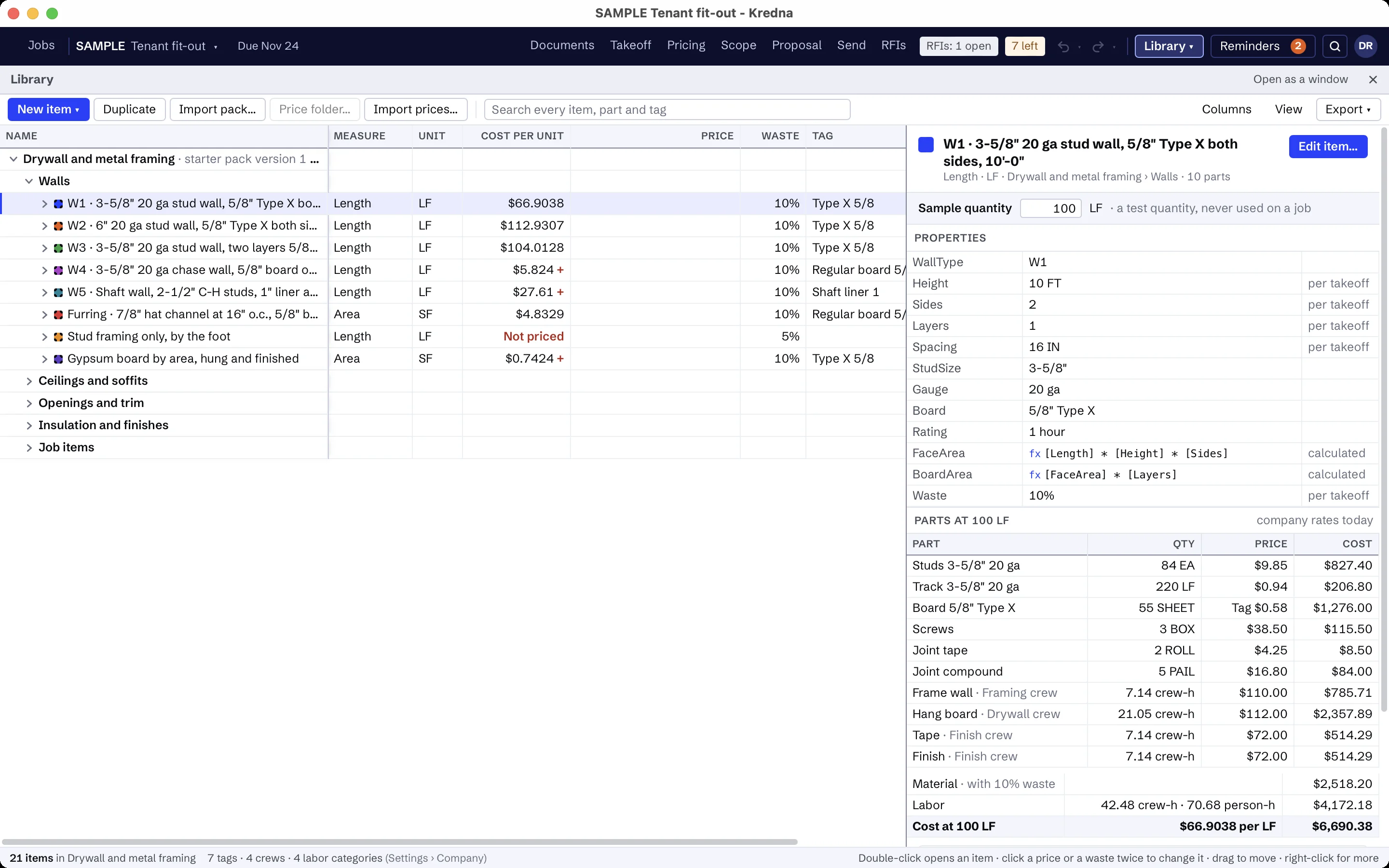
There is no plumbing starter pack. Make the items you price in your library once, each with its parts and quantity formulas, and every job copies them when it first uses them. For example:
- Water closet, urinal, lavatory, sink, shower and drinking fountain, each with its rough-in and trim labor
- Domestic water and sanitary waste pipe by size, with hangers at your spacing
- Vent, storm and gas pipe
- Floor drain, cleanout and water heater
- Your clauses for the plumbing and its testing and sterilizing, the points of connection, and site utilities, power and cutting by others
The prices are yours to set. A part without a price shows as Missing, never as zero, and every total that includes it is marked incomplete until you price it.
Find the plumbing scope. Settle what is by others.
Set up the scope assistant for plumbing once: what to look for, the disciplines and spec sections to read, and what is usually by others. It reads the plumbing plans, riser diagrams, schedules and site utility plans, highlights where your scope is with a jump to each spot, and flags work that is usually another trade's, such as:
- Site utilities beyond the building line
- Fire sprinkler piping
- Power wiring to equipment
- Cutting and patching of slabs and walls, unless listed
- Owner-furnished equipment and appliances
AI findings need estimator review. Check quantities, costs and scope against the project documents before submitting a bid.
Moving from another takeoff tool?
Pick an item, measure on the sheet and watch the quantity total in the job tree. Build your items once in the library, and the takeoff, pricing and proposal all read the same job.
Plumbing questions
How do I count plumbing fixtures from the drawings?
Can Kredna take off pipe by size?
Which drawings does a plumbing takeoff use?
Are fittings counted?
What does the AI do on a plumbing job?
Bring a plumbing set you know.
See fixtures, pipe and the proposal come together on a job your company has bid.