

Low voltage estimating software
Bid more low voltage work. Count each drop.
Data outlets, cameras, card readers and fire alarm devices counted from the plans. Cable worked out from the drops and the job's average run.
Kredna prices it with your own items and costs and keeps each count on its sheet.
Illustration on a made-up plan.
What a low voltage takeoff carries.
Outlets and devices are counted by type. Cable comes from the drops at each outlet through the outlet item's parts. Pathways are drawn as runs.
| What you take off | How | Carried in |
|---|---|---|
| Data outlets Cables each and the job's average run as item properties. Jacks, faceplates and cable are parts. | Count | EA |
| Cable A part on the outlet: outlets times cables each times the average run, with slack in the waste. | Count | LF |
| Wireless access points | Count | EA |
| Racks and patch panels From the riser diagram and the rack elevations. | Count | EA |
| Cameras, card readers and door contacts | Count | EA |
| Smoke detectors, horn strobes and pull stations Where fire alarm is in your work. | Count | EA |
| Cable tray | Linear | LF |
| J-hook pathway A hook part at your spacing, plus one at each run's end. | Linear | LF, hooks EA |
Count outlets and devices from the legend.
Count data outlets, cameras, card readers and fire alarm devices by type from the technology, security and fire alarm plans. Click each one, or box one symbol and auto count counts its matches on that sheet.
Check the count against the symbol legend before you price it.
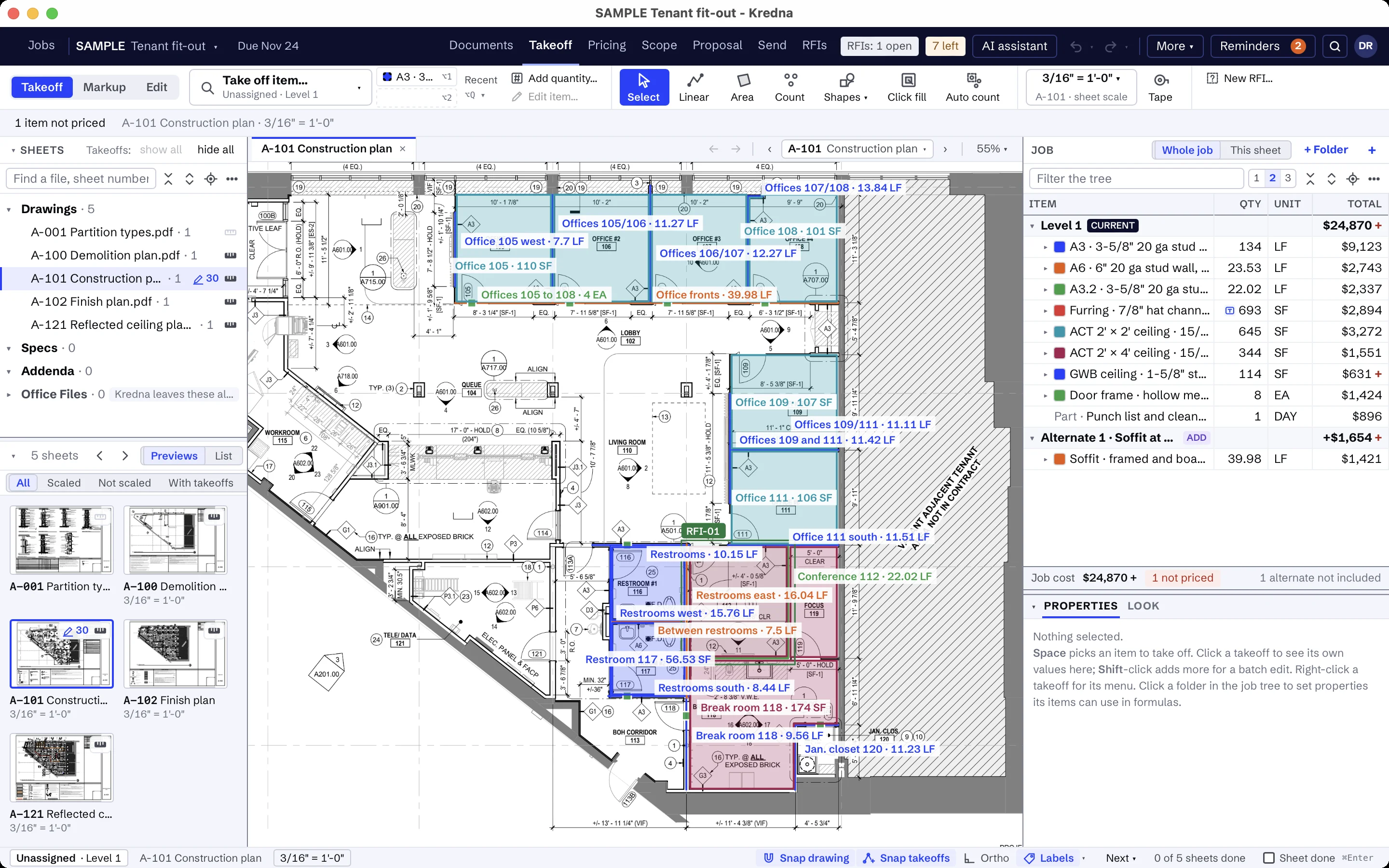
Work out the cable from the drops.
Give your data outlet item the cables each outlet gets and the job's average run as properties. Its parts work out the jacks, the faceplates and the cable, with slack in the waste.
Measure the average run from the telecom room with the tape, or set the one your company uses, and change it on the job's copy when a building runs longer.
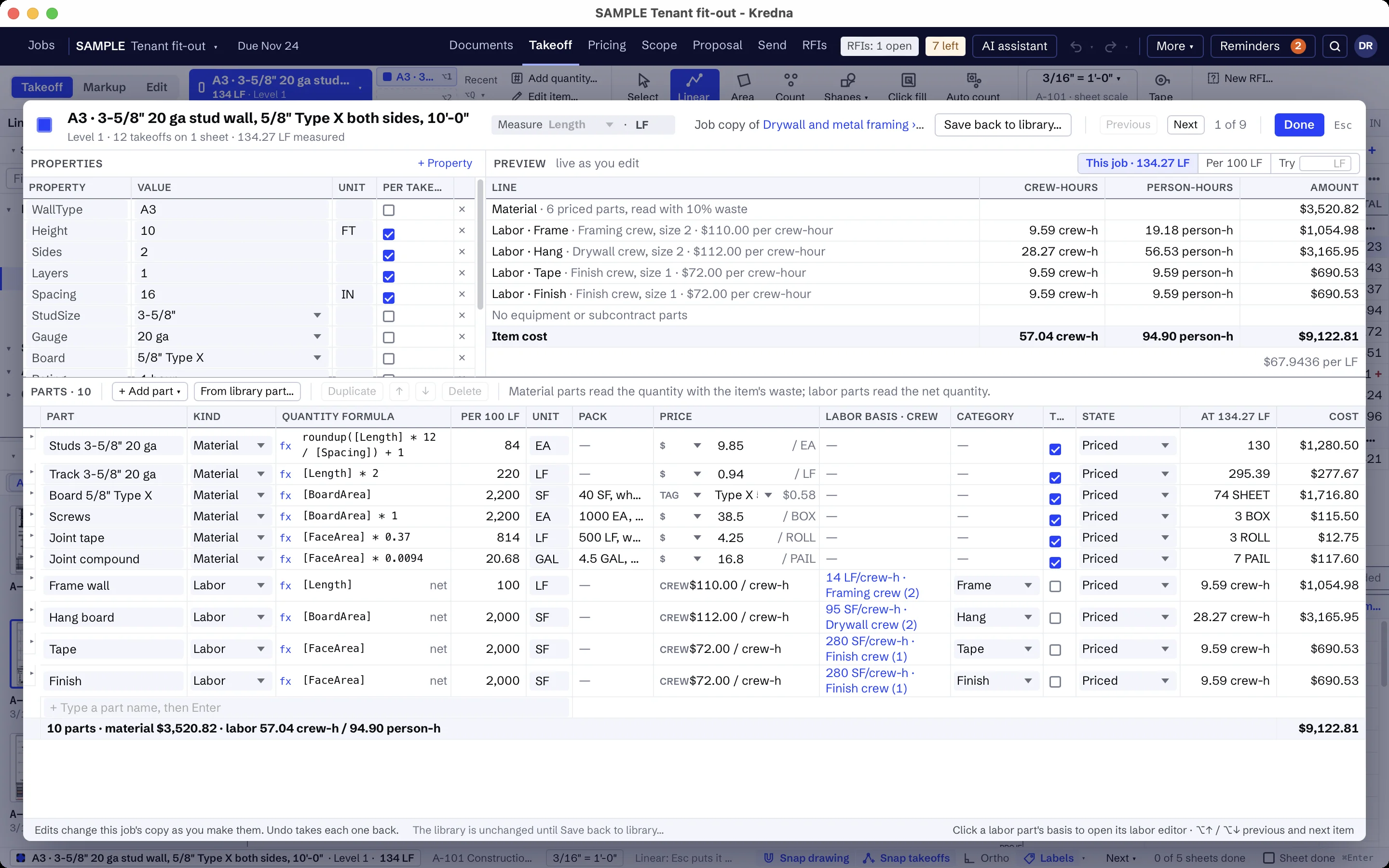
Draw the pathways by the foot.
Draw cable tray and J-hook paths along the corridors from each telecom room. The hooks come from the length at your spacing, plus one at each run's end.
Build your low voltage items once.
There is no low voltage starter pack. Make the items you price in your library once, each with its parts and quantity formulas, and every job copies them when it first uses them. For example:
- Data outlet, with jacks, faceplates and cable from the job's average run
- Wireless access point, equipment rack and patch panel
- Camera, card reader and door contact
- Smoke detector, horn strobe and pull station
- Cable tray, and J-hook pathway with hooks at your spacing
- Your clauses for the cabling and its testing and labeling, pathways in place before you pull, and conduit, power and owner electronics by others
The prices are yours to set. A part without a price shows as Missing, never as zero, and every total that includes it is marked incomplete until you price it.
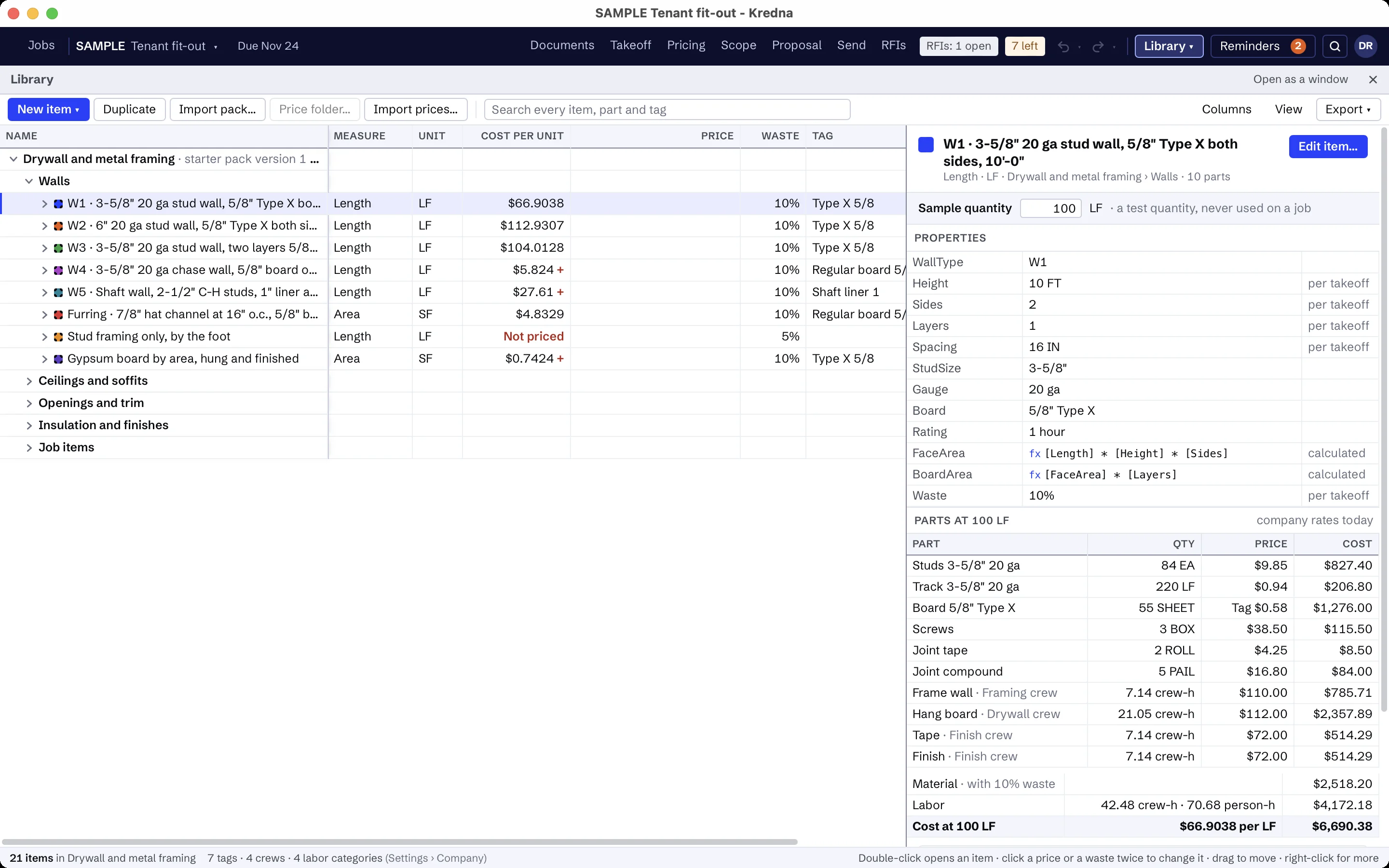
Find the low voltage scope. Settle what is by others.
Set up the scope assistant for low voltage once: what to look for, the disciplines and spec sections to read, and what is usually by others. It reads the technology, security, audiovisual and fire alarm plans, the legends and the rack layouts, highlights where your scope is with a jump to each spot, and flags work that is usually another trade's, such as:
- Conduit, boxes and raceways, usually by the electrician
- Power to equipment and racks
- Electrified door hardware
- Owner-furnished equipment and network electronics
- Firestopping, unless listed
AI findings need estimator review. Check quantities, costs and scope against the project documents before submitting a bid.
Moving from another takeoff tool?
Pick an item, measure on the sheet and watch the quantity total in the job tree. Build your items once in the library, and the takeoff, pricing and proposal all read the same job.
Low voltage questions
How do I estimate cable for a low voltage job?
Can Kredna count devices by symbol?
Which drawings does a low voltage takeoff use?
Is fire alarm part of a low voltage bid?
Who sets the boxes and conduit?
Bring a technology set you know.
See outlets, cable and the proposal come together on a job your company has bid.